If you want a North Dallas neighborhood that feels established, green, and distinctly different from a typical grid of city blocks, Greenway Parks deserves a close look. Buying here is about more than square footage or finishes. It is about choosing a neighborhood with a strong physical identity, a defined planning history, and a residential layout that still feels special today. This guide will help you understand what sets Greenway Parks apart, what kinds of homes you can expect, and what to weigh before you buy. Let’s dive in.
What Makes Greenway Parks Unique
Greenway Parks is a 150-acre Dallas neighborhood designed in 1927 by David R. Williams. According to the official homeowners association, it was created as Dallas’s first pedestrian-oriented neighborhood, built around shared greenways in the tradition of English commons. That origin still shapes how the neighborhood looks and feels today.
The neighborhood sits about 3 miles north of downtown Dallas. Its main boundaries are University Boulevard, Mockingbird Lane, Inwood Road, and the Dallas North Tollway. The area is also identified by the City of Dallas as Conservation District No. 10, adopted in May 2003.
One of the biggest differences you notice here is the layout. Greenway Boulevard divides the neighborhood, and the plan includes triangular entry parks and alternating east-west streets with broad shared greenbelts. Rather than turning inward toward busy roads, many homes relate to these green spaces, giving the neighborhood a park-like setting that feels calm and residential.
Greenway Parks Layout and Feel
In Greenway Parks, the green space is not just an added amenity. It is the organizing feature of the neighborhood. The National Park Service nomination notes that the shared greenways are commonly owned, generally 100 to 150 feet wide, and served by four-foot sidewalks.
That design changes the experience of everyday life in the neighborhood. Instead of a standard streetscape with every home facing a roadway, many homes front or side onto open green areas. Restrictions also keep fences, walls, and garage fronts off the greenway side, which helps preserve the open, connected character.
For many buyers, this is the heart of the appeal. If you value a neighborhood with visual openness, mature landscape character, and a more intimate feel than larger luxury areas, Greenway Parks offers a setting that is hard to duplicate.
Homes and Architecture in Greenway Parks
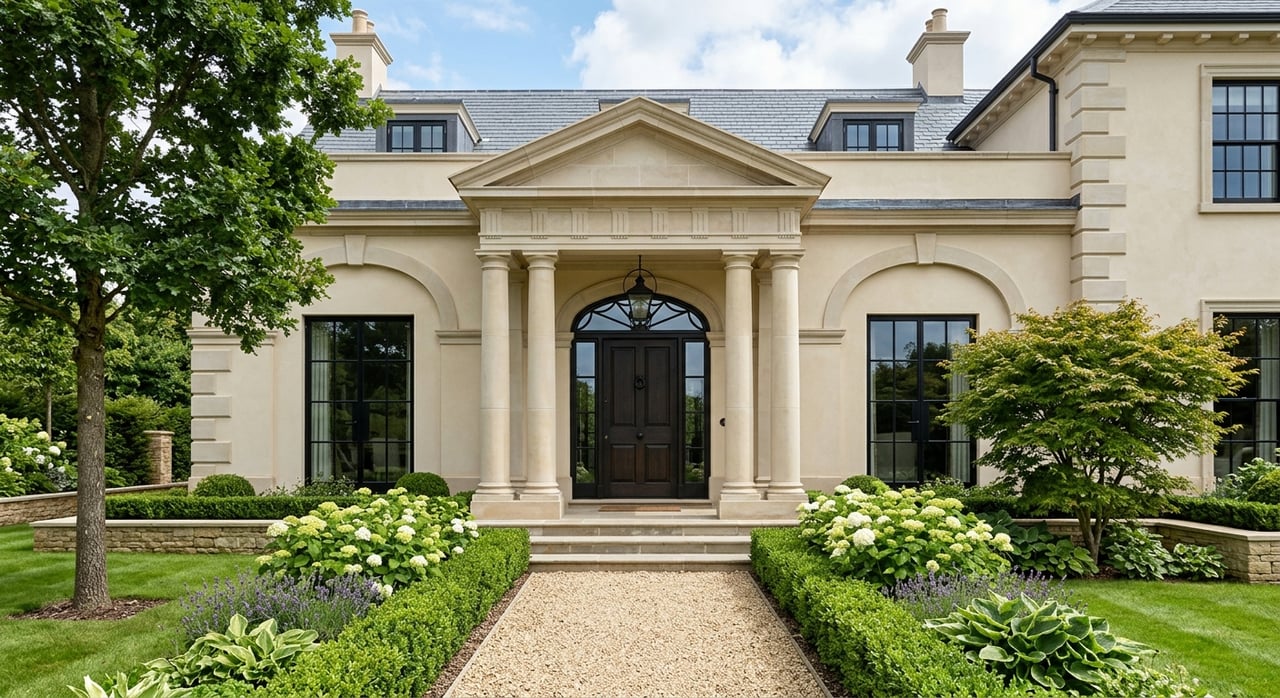
A common misconception is that Greenway Parks has one dominant house style. In reality, it offers a broad architectural mix built over several decades. That variety is part of what makes home shopping here interesting.
The National Park Service describes the housing stock as largely early- to mid-20th-century revival architecture, with homes dating from the late 1920s through the 1950s. Early homes were mostly Tudor Revival, while later construction leaned more toward Colonial Revival and Ranch styles.
The district also includes smaller numbers of Spanish Eclectic, French Eclectic, Monterey, Italian Renaissance, Minimal Traditional, Contemporary, and Mid-Century Modern homes. According to the National Park Service, Colonial Revival represents about 30 percent of the district, Ranch about 20 percent, and Tudor Revival about 12 percent.
The homeowners association adds that the neighborhood spans roughly seven decades of architecture. You may see storybook-era homes, postwar modern designs, 1950s ranch houses, and some larger European-influenced homes from the late 1990s and early 2000s. Many properties were designed by notable Dallas architects, including O'Neil Ford, Howard Meyer, Charles Dilbeck, John Aston Perkins, and Ralph Bryan.
What Buyers Can Expect From the Housing Mix
Because the neighborhood is not one-style or one-era, your search may involve very different kinds of homes at similar price points. One property may offer historic detailing and smaller original room proportions, while another may have a more updated footprint or later construction style. That range can be a real advantage if you want character without being locked into a single look.
It also means buyers should compare homes carefully. In a neighborhood like Greenway Parks, lot orientation, greenway relationship, architectural pedigree, and renovation history can all matter. Two homes with similar square footage may deliver very different living experiences.
This is one reason hyperlocal guidance matters here. In a neighborhood with conservation rules, architectural significance, and a varied housing stock, understanding the block-by-block differences can help you make a smarter decision.
Green Space and Neighborhood Amenities
Greenway Parks is known for its open space, and that reputation is backed by the neighborhood’s original planning. The National Park Service report notes more than 23 acres of parkland or open space in the district. That includes the triangular entry parks, Stemmons Park, and the long shared greenways between rows of homes.
The homeowners association also identifies Germany Park and Stemmons Park as part of the neighborhood’s history. This reinforces an important point for buyers: green space here is not an afterthought. It is one of the defining features that shapes both curb appeal and daily life.
If outdoor surroundings are high on your list, Greenway Parks offers a distinct advantage over neighborhoods where open space is limited to private yards. The shared landscape creates a different sense of scale and openness that many buyers find appealing.
Location and Access in Dallas
Greenway Parks combines a mostly residential interior with strong access to central Dallas. It sits next to University Park and about one mile east of Dallas Love Field. Its edges connect directly to the Dallas North Tollway, Inwood Road, Mockingbird Lane, and University Boulevard.
For buyers who want quicker access around the city, that location can be a practical plus. You are close to major routes while still buying into a neighborhood with a distinct internal identity. That balance between accessibility and atmosphere is part of Greenway Parks’ long-term appeal.
For relocation buyers especially, this can be an easy neighborhood to understand. It is established, centrally positioned, and clearly defined by major roads, yet it maintains a residential character once you are inside the neighborhood.
Greenway Parks Home Prices
Current Realtor.com market data places the median listing price in Greenway Park at $1,192,800, with a median price per square foot of $407. The neighborhood had 64 active listings, a median of 44 days on market, and homes selling at roughly 97 percent of list price. Realtor.com classifies the area as a buyer’s market.
Compared with Dallas overall, Greenway Parks sits well above the city median of $435,000 and $249 per square foot. Compared with broader North Dallas, where the median is about $1.24 million, Greenway Parks is closer to the middle of that range.
That pricing helps position the neighborhood for buyers who want a higher-end North Dallas address without reaching the price levels seen in some nearby marquee areas. It remains an upper-end market, but it does not sit at the very top of the local luxury ladder.
How Greenway Parks Compares Nearby
Relative to several well-known nearby enclaves, Greenway Parks currently prices below Highland Park, University Park, Bluffview, and Preston Hollow. The reported median listing prices are $4.50 million in Highland Park, $2.60 million in University Park, $2.35 million in Bluffview, and $2.08 million in Preston Hollow.
For some buyers, that comparison is important. Greenway Parks can offer historic character, recognized neighborhood identity, and strong location benefits at a lower entry point than some of Dallas’s most expensive residential markets.
That does not make it a value play in the broad sense. It simply means your budget may stretch differently here than in the top Park Cities tier or other elite luxury districts. For many buyers, that balance is exactly the draw.
Who Greenway Parks Fits Best
Greenway Parks tends to fit buyers who care deeply about neighborhood character. If your priorities include historic homes, shared green space, and a smaller-scale community feel, this neighborhood may align well with what you want.
It may also appeal to buyers who prefer a setting with a clear identity rather than a newer area with more uniform construction. The combination of older planning, architectural variety, and central location gives Greenway Parks a personality that can be hard to replicate.
For relocation buyers, it can be especially appealing if you want an established Dallas neighborhood with quick access and a strong sense of place. The neighborhood’s defined boundaries and visual character make it easier to understand than some broader search areas.
Key Tradeoffs to Consider Before Buying
Every neighborhood comes with tradeoffs, and Greenway Parks is no exception. The City of Dallas notes the area’s conservation district framework, and the research suggests that deed restrictions also shape what owners can and cannot do. Buyers who want maximum design freedom may find that more limiting than in some newer luxury neighborhoods.
This is worth taking seriously before you buy. If your plan involves a major exterior change, lot assembly, or a highly customized redevelopment approach, Greenway Parks may feel more constrained. The same rules that help preserve its look and feel can also reduce flexibility.
Buyers who want a dense retail setting may also prefer another area. Greenway Parks is primarily valued for its residential environment, internal open space, and architectural character, not for a walk-out-your-door retail experience.
Smart Buying Tips for Greenway Parks
If you are considering Greenway Parks, a thoughtful approach can help you avoid surprises. In a neighborhood like this, the details matter.
Here are a few smart questions to ask during your search:
- How does the home relate to the greenway, street, or park space?
- Is the property in its original form, updated, or substantially expanded?
- How do the home’s style and layout match your daily needs?
- What conservation district or deed restriction factors may affect future plans?
- How does the asking price compare with recent neighborhood positioning and current days on market?
These questions matter because Greenway Parks is not a plug-and-play neighborhood. It rewards buyers who look beyond surface finishes and understand the value of layout, setting, and long-term neighborhood consistency.
Why Local Expertise Matters Here
Greenway Parks is the kind of neighborhood where local context can make a real difference. Pricing, architecture, greenway orientation, and property constraints all shape value in ways that may not be obvious from a quick online search.
That is where experienced neighborhood guidance becomes useful. If you are weighing public listings, comparing home styles, or looking for a more discreet buying path, a connected local advisor can help you narrow the field and structure the right move.
For buyers focused on Park Cities and North Dallas, Debbie Ingram brings the kind of neighborhood-level insight that helps you move with more clarity and confidence. If you are exploring Greenway Parks or nearby areas, Debbie Ingram can help you evaluate opportunities, including the nuances that do not always show up in a listing.
FAQs
What is Greenway Parks in Dallas known for?
- Greenway Parks is known for its 1927 planning, shared greenways, more than 23 acres of open space, and a residential layout built around pedestrian-oriented green areas rather than a standard street grid.
What types of homes are in Greenway Parks?
- Greenway Parks includes a mix of Tudor Revival, Colonial Revival, Ranch, Spanish Eclectic, French Eclectic, Monterey, Italian Renaissance, Minimal Traditional, Contemporary, and Mid-Century Modern homes, along with some later European-influenced construction.
What is the price range feel of Greenway Parks compared with Dallas?
- Based on current Realtor.com data in the research, Greenway Parks is priced well above the Dallas median overall, but it sits below several marquee nearby luxury areas such as Highland Park, University Park, Bluffview, and Preston Hollow.
Is Greenway Parks a good fit for buyers who want historic character?
- Greenway Parks can be a strong fit if you want historic character, architectural variety, and a neighborhood with a distinct visual identity shaped by shared green space and conservation standards.
What should buyers know about Greenway Parks restrictions?
- Buyers should know that Greenway Parks is within a Dallas conservation district and also shaped by deed restrictions, which may limit certain design changes or redevelopment plans compared with less regulated neighborhoods.
Where is Greenway Parks located in Dallas?
- Greenway Parks is about 3 miles north of downtown Dallas and is bounded by University Boulevard, Mockingbird Lane, Inwood Road, and the Dallas North Tollway.